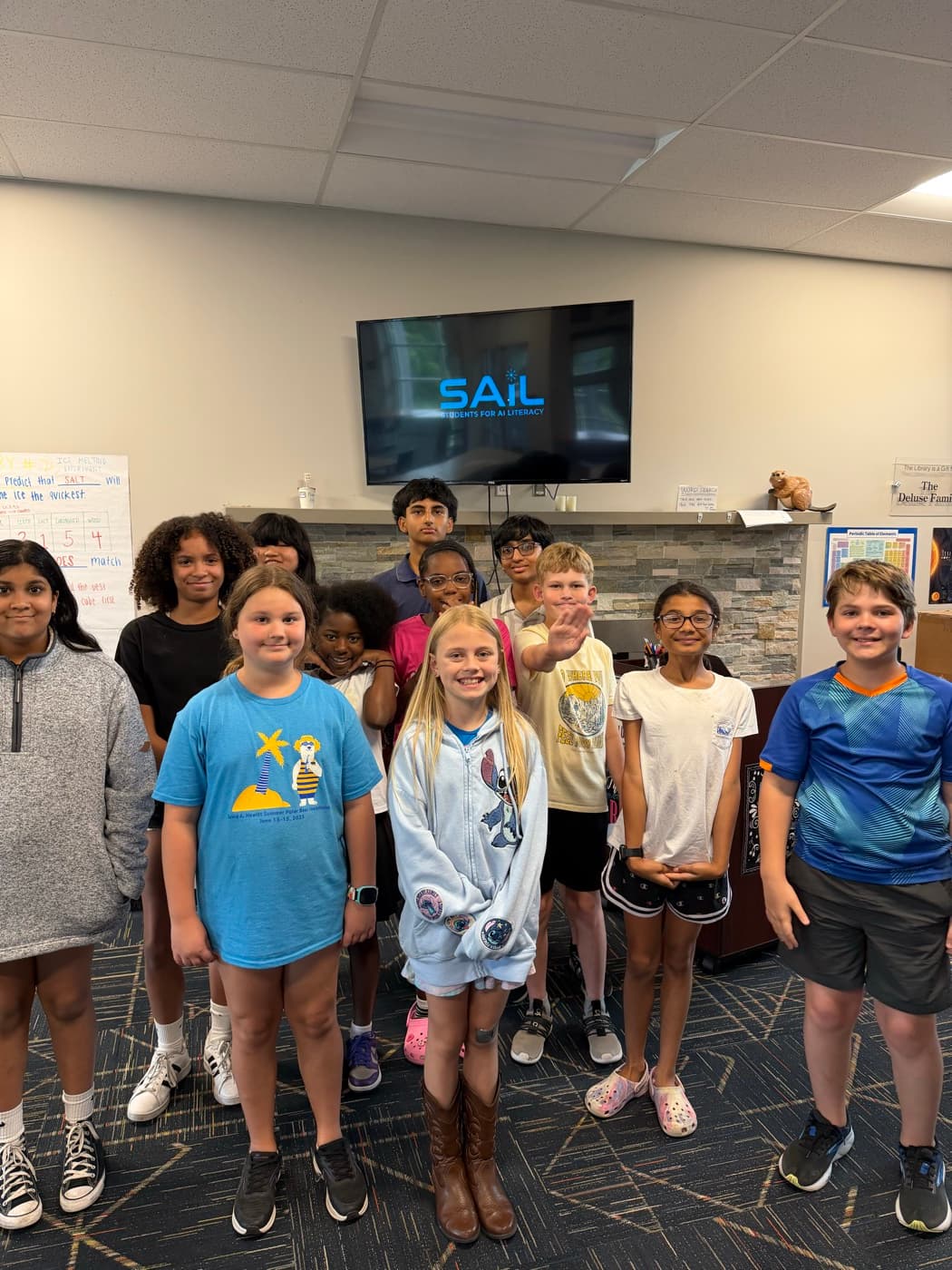
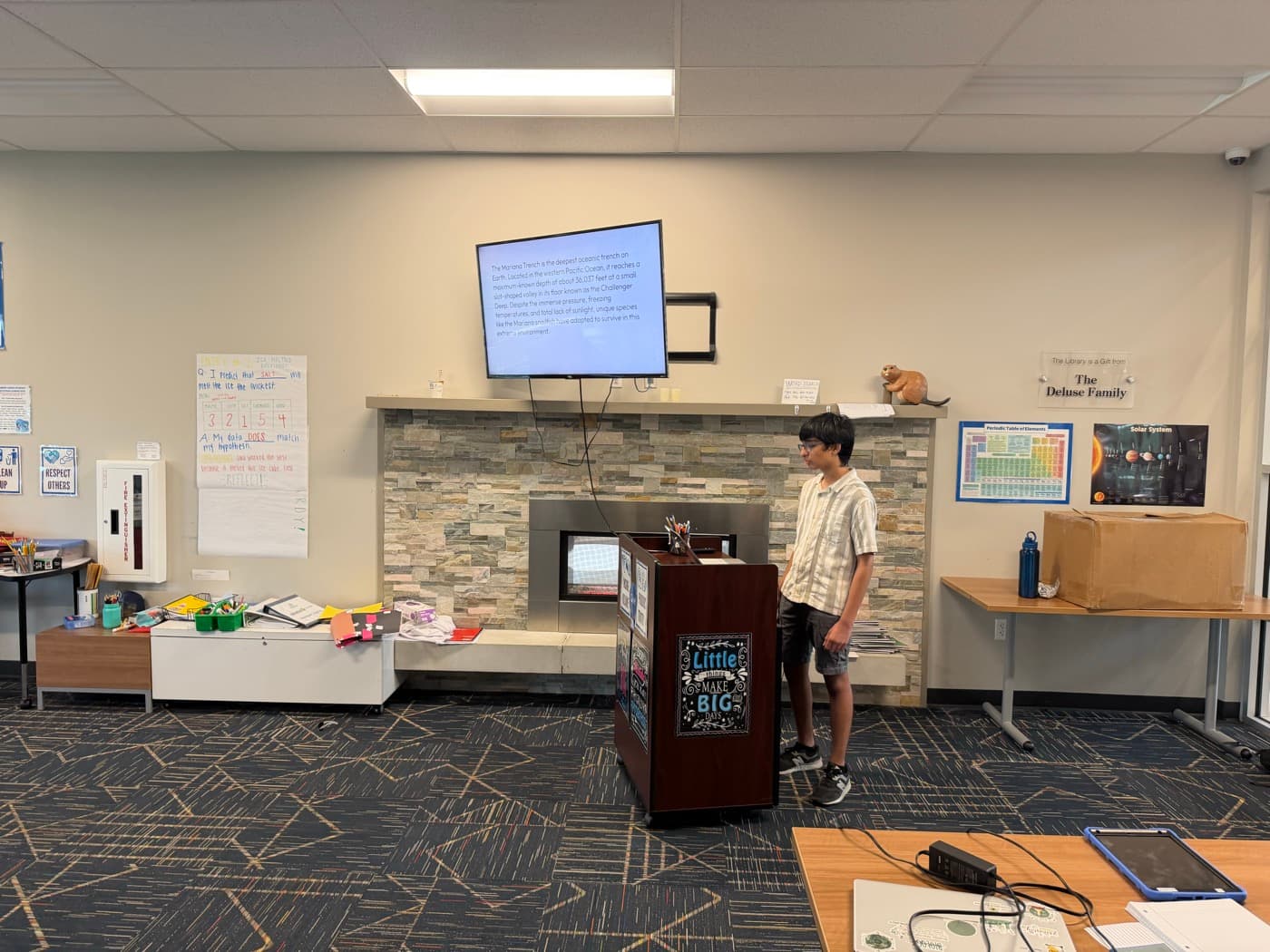
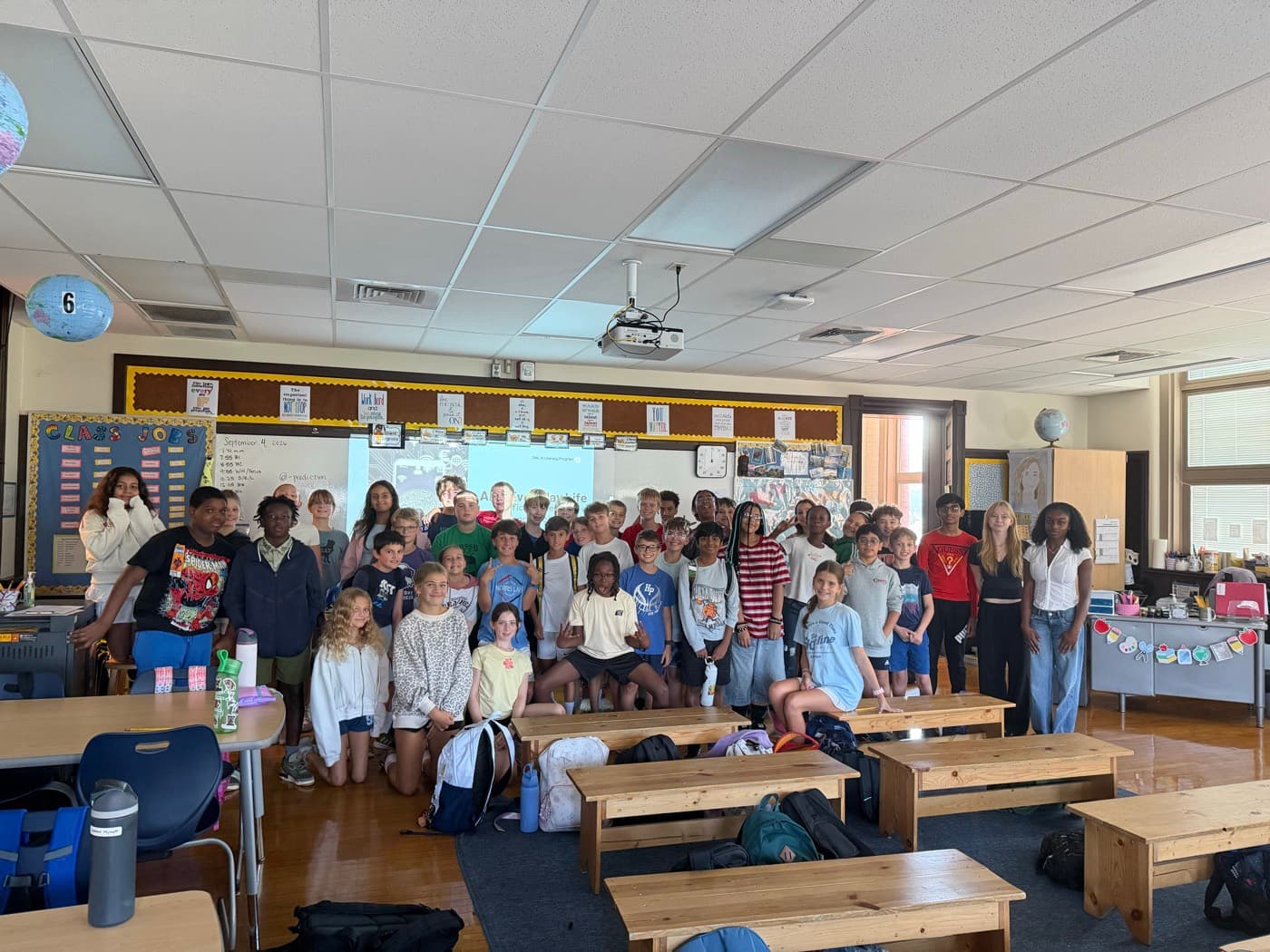
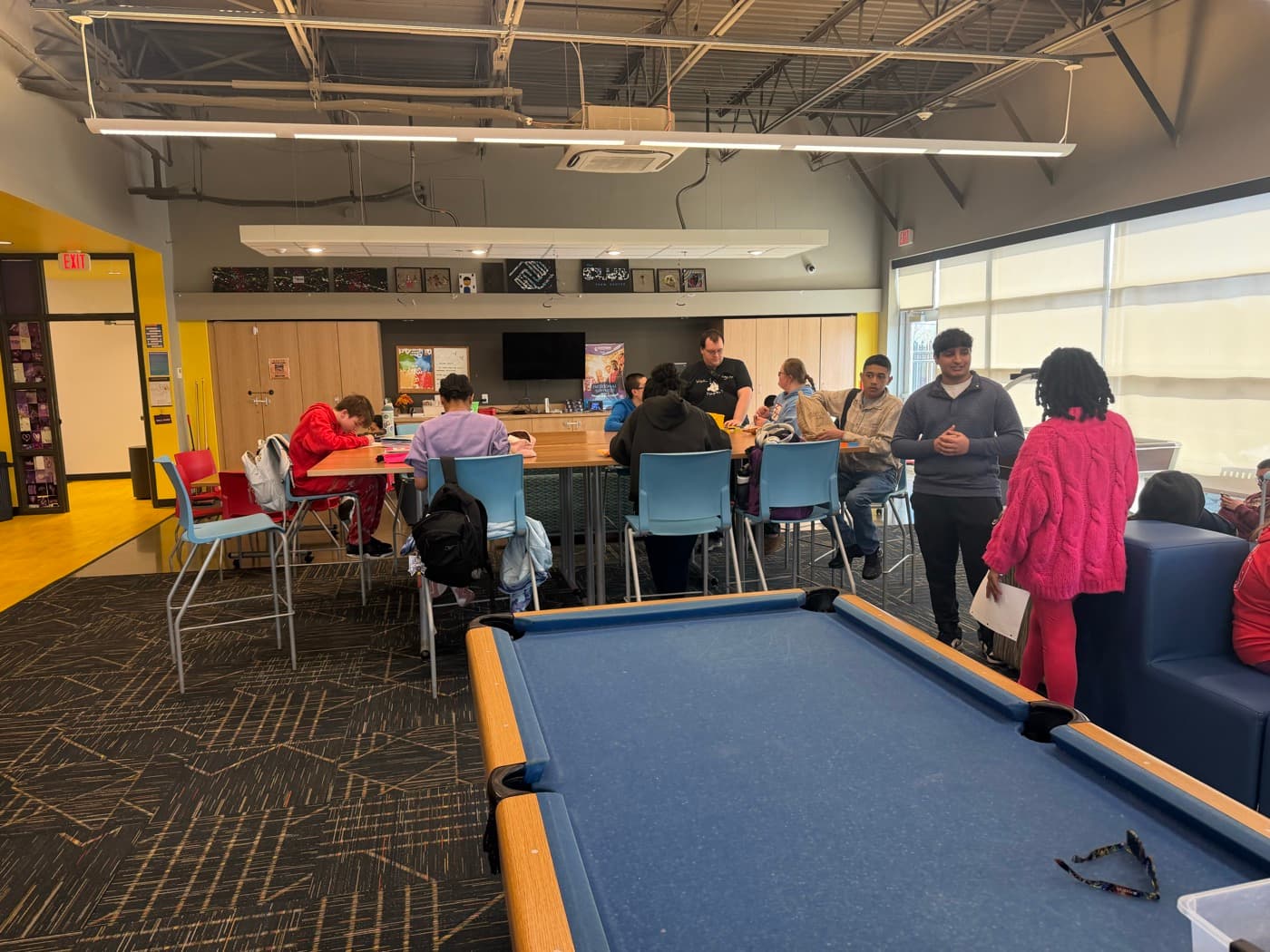
For our second summer session, SAIL volunteers returned to lead a full afternoon of hands-on AI literacy. Under the SAIL banner on the big screen, students dug into how everyday AI tools actually make decisions — and why understanding those tools matters more than ever.
We opened the way we usually do: with a game. Students played a drawing game where a neural network tries to guess their doodles in real time. It gets a bicycle right immediately, then insists a perfectly good drawing of a cat is a lion. That gap — confident and wrong — is the whole lesson, and students find it themselves before anyone defines a single term.
One of our student leads then walked the group through how a language model actually produces text: not by looking up facts, but by predicting what word tends to come next. We ran the human-or-AI exercise, where students read short passages and vote on which were machine-written. Most groups are confident and most groups are wrong, which is the point. One passage recommends a food bank as a must-visit tourist attraction — fluent, well-structured, and completely false.
From there, participants worked through guided activities, filling clipboards with their own predictions and reflections before comparing notes as a group. The questions that came up were the ones we hope for: how would I check this, and who decided what the model learned?
We spent the last stretch on judgment rather than mechanics — where AI helps with schoolwork and where it crosses into doing the work for you, why a model can sound authoritative about something it has invented, and what it means that these systems are trained on text written by people with their own blind spots.
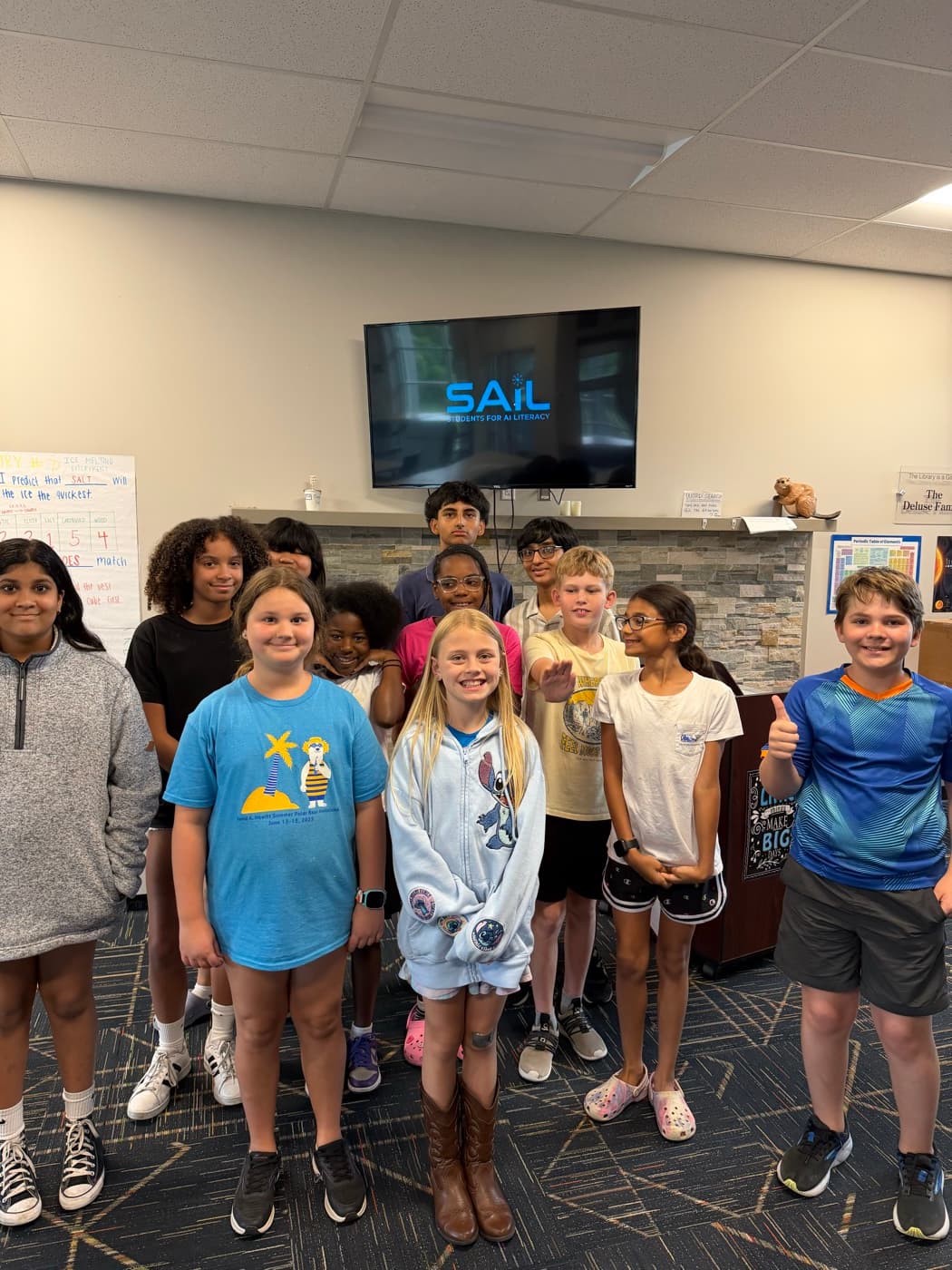
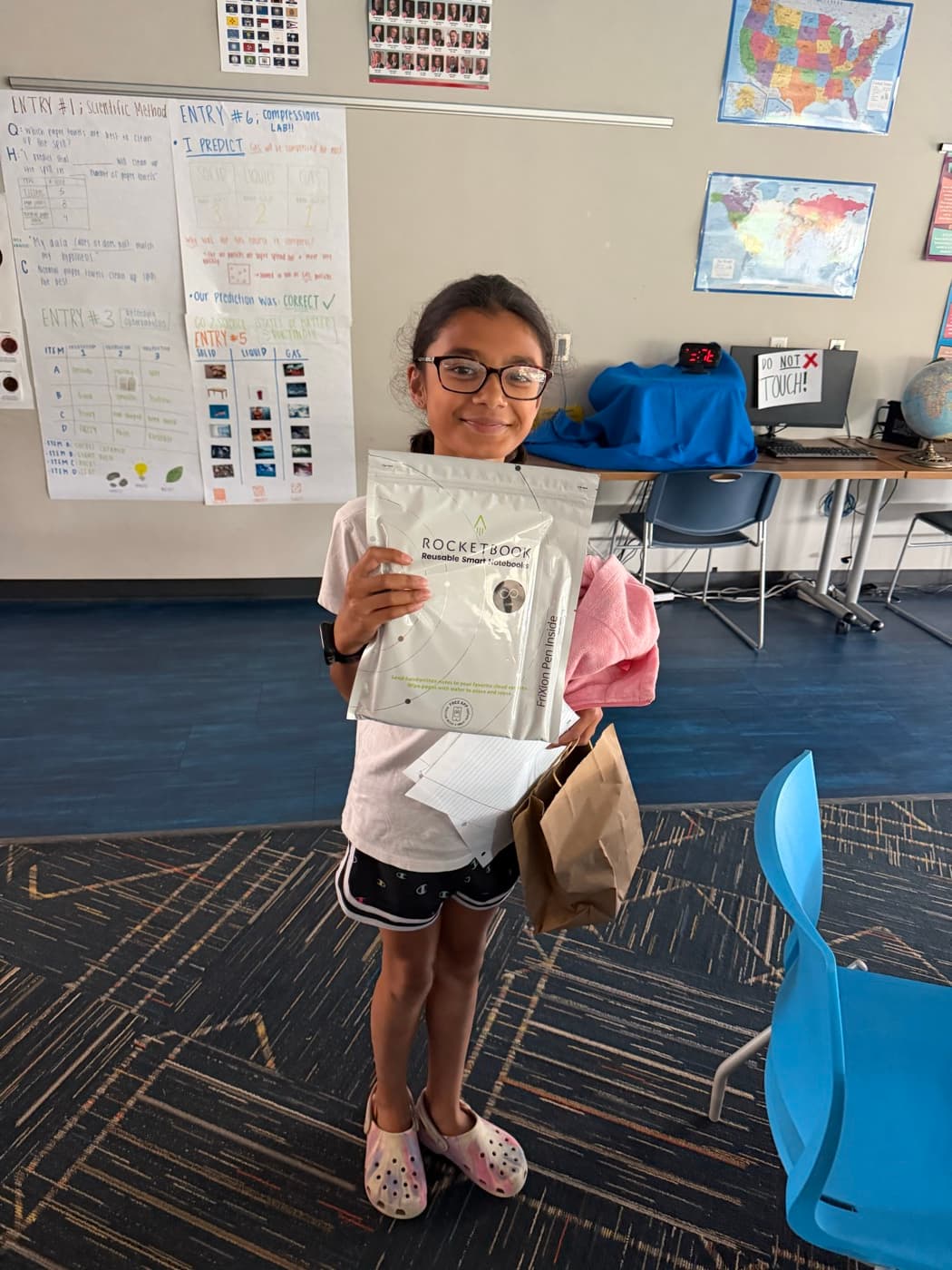
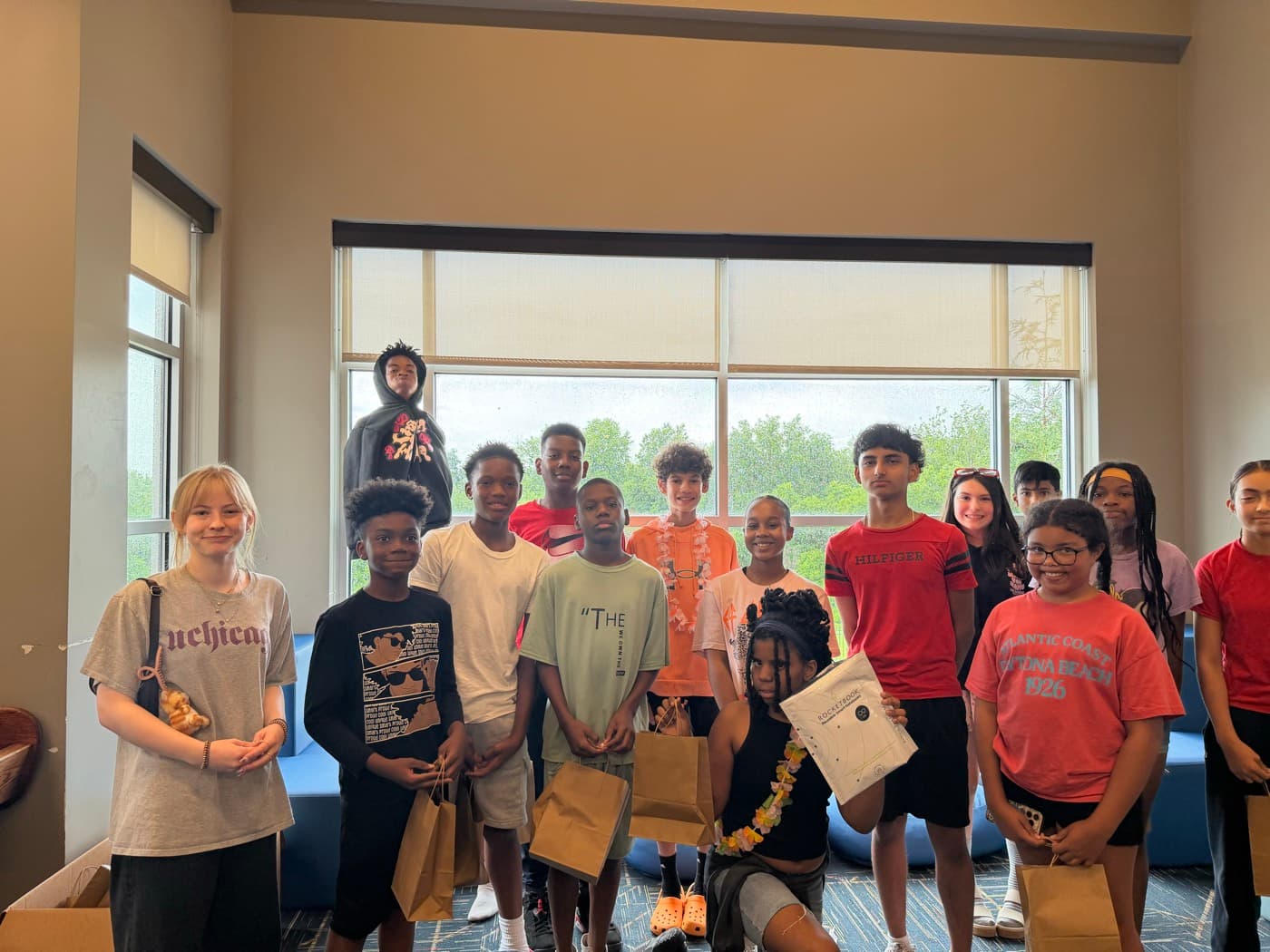
Every participant went home with a reusable smart notebook to keep experimenting on their own. We closed the day with a group photo — a room full of young people who now think a little more critically about the technology shaping their world.